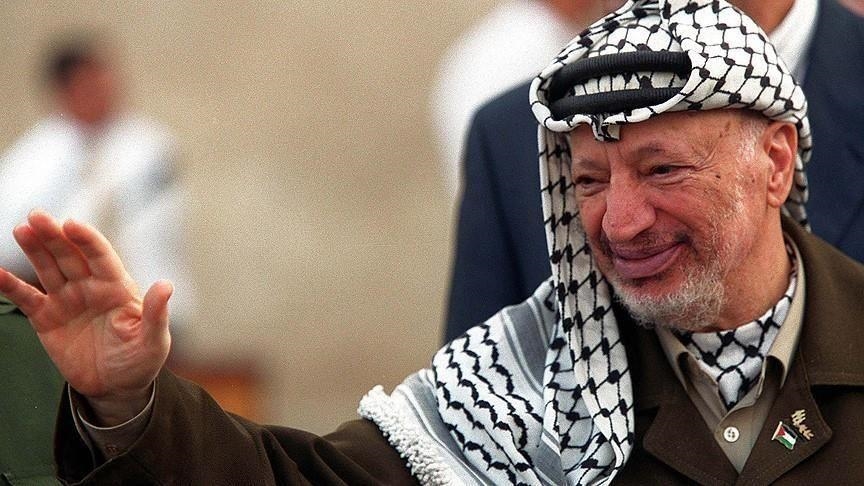
Ramallah, Palestine — For over four decades, the image of Yasser Arafat—donning his trademark black-and-white keffiyeh—defined the Palestinian cause across the globe. To many Palestinians, he was the father of their national movement. To his critics, he was an obstacle to peace. But in any discussion on the Middle East conflict, Arafat remained the central figure.
This is the story of a revolutionary-turned-president whose legacy continues to cast a long shadow over the Israeli-Palestinian conflict and regional diplomacy.
From Fighter to Political Leader
Born in 1929 and radicalized by the 1948 Nakba, Arafat co-founded Fatah in the 1950s while in exile in Kuwait. In 1969, he rose to the top of the Palestine Liberation Organization (PLO) and transformed it from a loose confederation of guerrilla factions into the internationally recognized representative of the Palestinian people.
His leadership was marked by armed struggle and defiant diplomacy—particularly during years of exile in Lebanon and Tunisia. He survived Israeli airstrikes, assassination attempts, and political isolation, all while shaping the global narrative of the Palestinian plight.
“Olive Branch and Freedom Fighter’s Gun”
In 1974, Arafat addressed the United Nations General Assembly, making history as the first leader of a stateless nation to speak before the world body. His words were carefully chosen:
“I have come bearing an olive branch and a freedom fighter’s gun. Do not let the olive branch fall from my hand.”
The line encapsulated his dual strategy: offering peace to those who would accept Palestinian sovereignty, and resistance to those who denied it.
Bilateral Relations: From Conflict to Tentative Coexistence
Arafat’s political life was inextricably linked to Israel, and his transformation from combatant to negotiator became most visible in the 1990s.
In 1993, he entered into direct bilateral talks with Israel for the first time, resulting in the Oslo Accords. Signed with Israeli Prime Minister Yitzhak Rabin and witnessed by U.S. President Bill Clinton, the agreement recognized both Israel and the PLO, creating a new diplomatic channel after decades of mutual hostility.
This landmark agreement marked a dramatic shift in Israel-Palestine bilateral relations—ushering in hope but also sparking intense criticism from hardliners on both sides. For Israel, it meant acknowledging the PLO as a legitimate negotiating partner. For Palestinians, it was the first legal foothold toward statehood in the form of the Palestinian Authority, which Arafat would lead.
While Oslo brought Arafat closer to Western powers, particularly the United States, it also strained his relations within the Arab world. Countries like Jordan, Egypt, and the Gulf States took varied stances toward Arafat, often balancing support for the Palestinian cause with their own diplomatic interests.
Despite numerous setbacks, Arafat maintained personal ties with world leaders—including Nelson Mandela, Fidel Castro, King Hussein of Jordan, and several U.S. presidents—ensuring Palestine remained a consistent feature of international diplomacy.
A Peace That Slipped Away
Following the 1994 Nobel Peace Prize, shared with Rabin and Israeli Foreign Minister Shimon Peres, expectations soared. But peace remained elusive. Final status talks collapsed, mutual distrust escalated, and the outbreak of the Second Intifada in 2000 brought bilateral talks to a halt.
By 2002, Arafat was confined by Israeli forces to his Ramallah compound, accused of supporting terrorism while he claimed he was still open to negotiation.
He died in November 2004 in Paris. While the official cause was a stroke, conspiracy theories of poisoning—possibly political—continue to circulate in the Arab world.
Legacy and Regional Impact
Even in death, Arafat remains a deeply polarizing figure. In the West, he is remembered as the flawed peacemaker who could not rise above political violence. In Israel, as a former adversary who later endorsed peace, but perhaps too late. Across the Arab world, he is often revered as a tenacious symbol of resistance.
His role in shaping Palestine’s bilateral relations—particularly with Israel and the U.S.—transformed the Palestinian movement from an armed struggle to a diplomatic force. He did not live to see a Palestinian state, but his efforts carved out the international space that keeps the issue alive in global forums.
Yasser Arafat once told the world, “Do not let the olive branch fall from my hand.” He extended that branch many times—sometimes too late, sometimes not far enough. Yet even his fiercest critics acknowledge: Arafat made the world listen.
And long after his passing, the struggle he embodied continues—on negotiating tables, in refugee camps, and on the streets of Gaza and the West Bank.