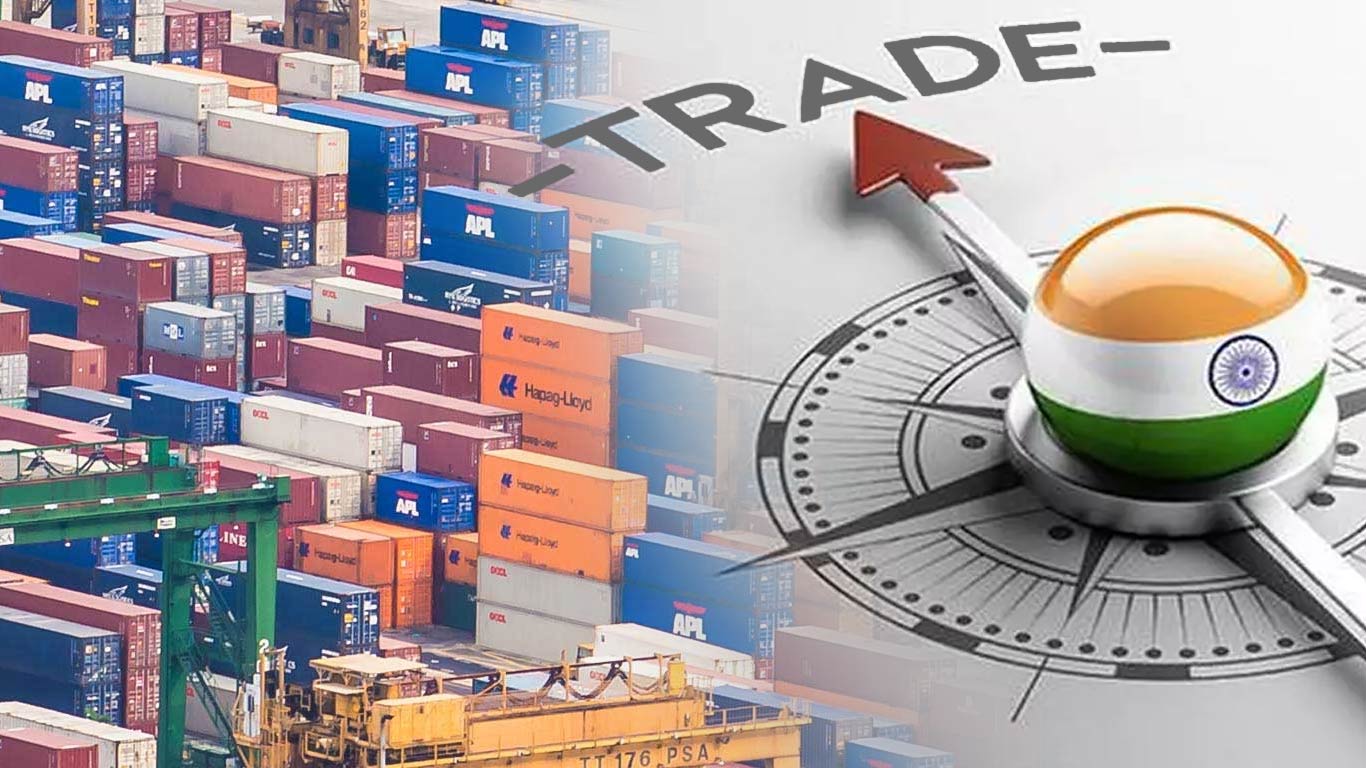
The label “tariff king” has trailed India in international debates for several years, particularly since the Trump administration used it as shorthand for what it saw as New Delhi’s protectionism. The phrase is striking, but like most slogans, it distorts more than it explains. A closer look at the numbers and the global context shows that India is far from an outlier on tariffs.
In a developing economy, tariffs are not just barriers for the sake of barriers. They serve as tools of economic policy. On the one hand, they provide protection for domestic industries that are not yet strong enough to face global competition. On the other, they generate much-needed government revenue in systems where tax bases are narrow. India’s tariff regime fits this developmental logic.
It is also important to remember how far India has traveled since the 1980s, when it was genuinely a closed economy with steep tariff walls. The liberalization that began with the 1991 economic reforms, and the commitments India undertook during the Uruguay Round that gave birth to the World Trade Organization, set the country on a path of steady reduction. Year after year, applied tariffs have come down, even if the change has been cautious rather than dramatic.
Much of the misunderstanding comes from confusing bound tariffs with applied tariffs. Bound tariffs are the ceilings India is legally allowed to impose under WTO rules; applied tariffs are the actual duties charged at the border. Bound rates in India are high, by design, giving policymakers room to maneuver in times of crisis. But the rates that really affect trade — the applied tariffs — are significantly lower.
On paper, India’s simple average applied tariff stands at around sixteen percent. That figure looks high compared to many developed countries, but it is misleading because it gives equal weight to every product line regardless of how much of that product is actually imported. When tariffs are measured in a way that reflects actual trade flows — the trade-weighted average — the numbers tell a different story. WTO data places India’s trade-weighted tariff in the single digits, around seven to eight percent, while some alternative compilations calculate it even lower, around 4.6 percent. Whatever the methodology, the figure is far from extreme.
The areas where India does stand apart are agriculture and automobiles. In both cases, the reasons are structural and deeply political. Nearly half of India’s 1.4 billion people depend directly or indirectly on farming. Most plots are tiny, mechanization is limited, and farming is often a matter of survival rather than commerce. To expose these farmers to cheap imports from countries whose producers are heavily subsidized would be an act of economic self-destruction. For any elected government, such a move is politically impossible. The same holds true for automobiles, which anchor India’s manufacturing economy and provide mass employment. The tariff walls in these sectors are about preserving livelihoods as much as about industrial strategy.
And even here, India is not unique. In fact, many of the developed economies that criticize India are themselves far more protectionist when it comes to their own sensitive sectors. The European Union, Japan, and South Korea all maintain agricultural tariffs that are higher than India’s, with duties on certain dairy, fruit, and vegetable imports running well above 200 percent. Against that backdrop, India’s average farm tariffs in the thirty percent range look almost modest.
Beyond these exceptions, India’s tariff structure is very much in line with other developing economies. Countries with comparable or lower incomes, such as Bangladesh, Argentina, and Türkiye, maintain similar or higher overall tariff levels. Where India is in fact unusually open is in technology and electronics. Many categories of semiconductors, computers, and IT hardware face zero or minimal tariffs. By contrast, regional competitors like Vietnam, China, and Indonesia apply much higher rates on the same products.
The American charge of India as a “tariff king” also rings hollow in light of Washington’s own record. Several Trump-era U.S. tariffs, particularly those imposed on steel and aluminium under Section 232, were found by WTO panels to be inconsistent with global trade rules. At the same time, the WTO’s dispute settlement system has been paralyzed, leaving such rulings without real enforcement. Against this backdrop, it is difficult to take the rhetoric of tariff purity at face value.
The picture that emerges is more balanced than critics admit. India does protect agriculture and automobiles, and it does so for reasons that are rooted in political economy and social survival. But on most other goods, its applied tariffs are modest and its trade-weighted average is well within global norms. Far from being a king of tariffs, India has been moving steadily — if cautiously — toward greater openness since the 1990s.
The task for India is not to capitulate to simplistic labels, but to continue using tariffs strategically: protecting the vulnerable where necessary, while opening pathways for competitiveness in industries that will shape the country’s economic future. In this light, the moniker “tariff king” says more about international politics than about India’s actual trade policy.