Three years ago, as part of an in-service training program for journalists from the Maldives, twenty of us traveled to India for a ten-day experience hosted by Amity University, Noida. The training sessions were insightful, but what stayed with me was not the classrooms or lectures. It was a fleeting encounter with a little girl in a bustling Sector 18 market in Noida of Noida that left an indelible mark on my heart.
One afternoon, after visiting the a media house, my colleagues and I decided to explore the local market. The vibrant streets of Noida, filled with chatter and the scent of spices, were a stark contrast to the modern urbanity we had seen earlier. Crowds swirled around us, some people approaching to beg, others simply staring curiously at the group of visitors.
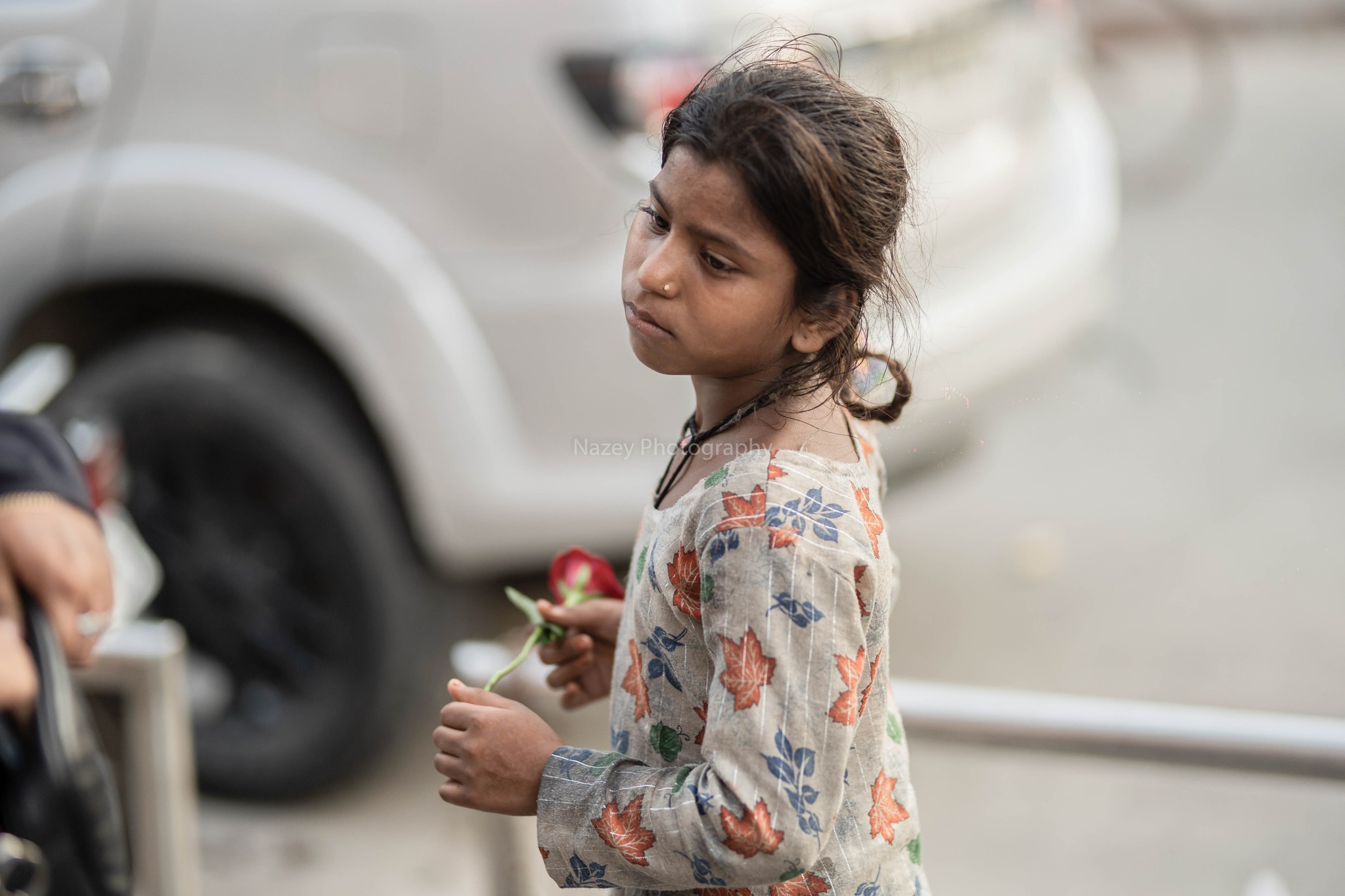
Amid this chaos, my attention was captured by a girl, no older than nine. She had the most striking eyes that seemed to hold both innocence and sorrow. Her clothes were old and dusty, a stark reminder of the struggles faced by many. It was a school day, and I wondered why she wasn’t in a classroom like other children her age. As I held a red rose given to me by the media house earlier, I noticed her gaze fixed on it. Her small, hesitant hand reached out toward me.
Realizing I had no local currency to offer, I handed her the rose. Her face lit up with a smile so pure that it momentarily erased the sadness etched in her features. One of my colleagues had a camera, and I borrowed it to capture her photograph. Through the lens, I saw that her smile, though beautiful, didn’t quite reach her eyes. It was as if something was still missing.
I approached her and softly asked, “Why aren’t you in school today?” She looked down, avoiding my gaze. Before she could answer, a voice called out to her from behind. Turning, I saw what appeared to be her family—or perhaps someone watching over her—gesturing for her to continue begging. My heart sank.
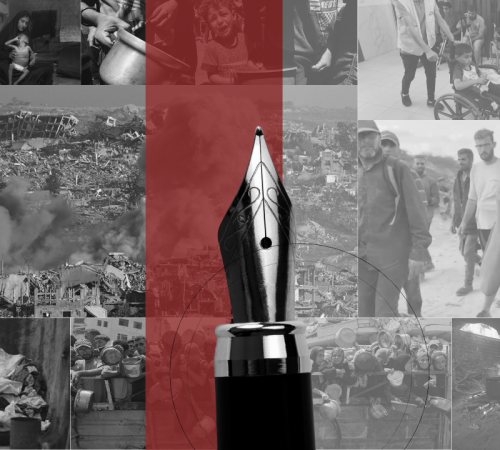
As I turned back to her, I noticed her eyes now fixated on the pen tucked into my pocket. To a journalist, a pen is more than an instrument; it’s a tool of expression, a symbol of empowerment. Without a second thought, I pulled it out and handed it to her. Her face brightened, this time with genuine joy. Clutching the pen, she walked away, her small frame disappearing into the crowd. In that moment, I felt a strange mix of hope and despair—hope that the pen might inspire her and despair at the reality she faced.
Three years later, as I scrolled through my photo gallery, I stumbled upon her picture. Her gray eyes stared back at me, and I couldn’t help but wonder about her fate. Is she in school now? Does she still have the pen I gave her? Did that small gesture make any difference in her life?
This encounter made me reflect deeply on the transformative power of education. Across the world, millions of children like her are deprived of schooling, trapped in cycles of poverty that rob them of their potential. Education is not just a human right; it is a pathway to breaking free from poverty, a means to dream beyond immediate survival. A pen, a book, or a classroom can ignite a spark that changes a life.
As jurnalists, we wield pens to tell stories and influence change. But the true power of a pen lies in the hands of those who can use it to write their own futures. That little girl’s story remains a poignant reminder that every child deserves the chance to learn, to grow, and to dream.
Let’s work toward a world where no child’s education is sacrificed to circumstance. For in the eyes of every child is the promise of a brighter tomorrow, waiting to be fulfilled.