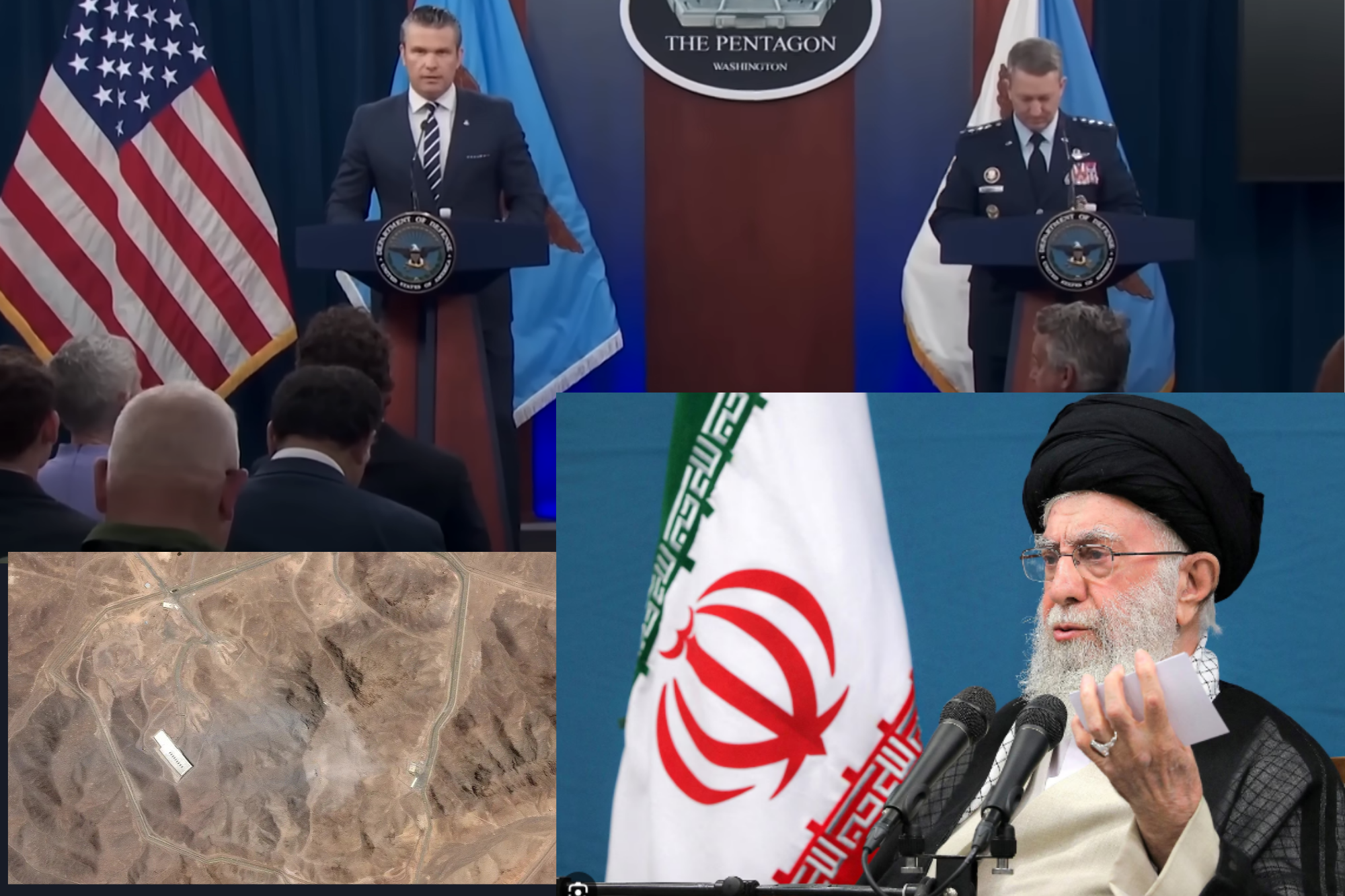
Tehran – Iran has sharply denounced early Sunday’s U.S. air strikes on its nuclear facilities, calling them “a betrayal of diplomacy” and warning that the United States “will bear full responsibility for the consequences.”
The operation—named Operation Midnight Hammer targeted the Fordow, Natanz, and Isfahan nuclear sites using stealth B‑2 bombers armed with GBU‑57A/B 30,000‑lb bunker‑busting bombs, alongside Tomahawk cruise missiles launched from submarines. Pentagon officials described it as the largest-ever B‑2 mission, with “severe damage” inflicted on underground facilities in a carefully orchestrated 18‑hour sortie.
Citing Iran’s Foreign Ministry, the Atomic Energy Organization confirmed damage at the three sites but denied any radiation leaks, noting the sites had been evacuated in advance. President Trump later declared in a national address that those facilities had been “completely and totally obliterated,” though Pentagon leaders cautioned that a full assessment would take time.
In swift response, Iran launched over 25 ballistic missiles toward Israel early Sunday, striking Tel Aviv, Haifa, Beer Yaakov, and Nes Ziona.
Emergency services reported around 86 people wounded—including 23 moderately—in several impacted locations. In Tel Aviv, residential buildings and a nursing home suffered heavy damage; evacuations and bomb‑shelter use helped limit casualties.
Iran’s Foreign Minister Abbas Araghchi stated:
“The U.S. showed they have no respect for international law.…There would be no return to diplomacy until it had retaliated.”
Tehran also hinted at considering further reprisals, including possible disruption of the Strait of Hormuz, and announced it would halt diplomatic engagement with Washington.
The international reaction has been cautious: the U.N., E.U., Russia, and China called for restraint and urged a return to diplomacy. The U.N. Security Council has convened an emergency session to discuss the crisis .